
"inspection standard"
500 article(s) found

Nanning bonded Logistics Center returns imported substandard coffee
According to the Nanning Inspection and Quarantine Bureau, the Nanning bonded Logistics Center returned a batch of instant coffee imported from Malaysia this month. This is also the first time that Nanning bonded Logistics Center has returned imported coffee unqualified products. It is understood that this batch of substandard instant coffee from Malaysia is divided into two varieties: original flavor and mixed nut flavor, with a total of 244cases of 3.12t, worth US $11600. By

Coffee beans Yunnan coffee beans special secondary standard
Special Grade II Appearance and Sensory Characteristics items require special Grade II Sensory Aroma, flavor and taste are very good. Appearance should be light blue or light green. Physical indicators Special Grade II (7.1mm) Inspection method Particle size/>, % 90 DB53/T 154.6 Broken beans/(%), 10 DB53/T 154.8 Discolored beans/(%), 2.0 DB53/T 154.8 Foreign matter/(%), 0.1 DB53

Lishui imports prepackaged coffee for the first time
On May 2, the imported prepackaged coffee accepted by Lishui Inspection and Quarantine Bureau for the first time has successfully entered the market, with a total of 723 cases and 1013.6 kilograms. The imported prepackaged coffee comes from Italy, a world-famous coffee country, including cappuccino, latte capsules, Arabica barreled coffee beans and other 12 varieties.

More varieties of coffee have been eaten. Lishui imported prepackaged coffee for the first time.
On May 2, the imported prepackaged coffee accepted by Lishui Inspection and Quarantine Bureau for the first time has successfully entered the market, totaling 723 cases and 1013.6 kilograms. The prepackaged coffee imported this time comes from Italy, a world-famous coffee country, including cappuccino, latte coffee capsules, Arabica barreled coffee beans and other 12 varieties.
Manual inspection of high-quality coffee beans
With reference to the origin and grading, grab the raw beans with your hands and check their appearance. The feeling of the hand is very important. Judging from the appearance of raw beans, their quality must have some experience, at the same time, it is difficult to set standards. The color has no difference in uniform light green, with luster. Also take into account the changes in color after harvest. The shape requires uniform and neat particles, and there should be no deformed beans.
Fine Coffee: manual Inspection of Coffee beans
With reference to the origin and grading, grab the raw beans with your hands and check their appearance. The feeling of the hand is very important. Judging from the appearance of raw beans, their quality must have some experience, at the same time, it is difficult to set standards. The color has no difference in uniform light green, with luster. Also take into account the changes in color after harvest. The shape requires uniform and neat particles, and there should be no deformed beans.

Classification standard of high-quality coffee beans Yunnan coffee bean special secondary standard
Special secondary appearance and sensory characteristics project requires special secondary sensory aroma, flavor and taste are very good. The appearance should be light blue or light green. Physical index item special second level (7.1mm) test method granularity / >, 90 DB53/T 154.6 broken beans / (%), 10 DB53/T 154.8 discolored beans / (%), 2.0 DB53/T 154.8 foreign bodies / (%), 0.1 DB53

The technique of selecting coffee beans manual inspection of raw coffee beans
With reference to the origin and grading, grab the raw beans with your hands and check their appearance. The feeling of the hand is very important. Judging from the appearance of raw beans, their quality must have some experience, at the same time, it is difficult to set standards. The color has no difference in uniform light green, with luster. Also take into account the changes in color after harvest. The shape requires uniform and neat particles, and there should be no deformed beans.

Manual inspection reference origin and grade classification of raw coffee beans
With reference to the origin and grading, grab the raw beans with your hands and check their appearance. The feeling of the hand is very important. Judging from the appearance of raw beans, their quality must have some experience, at the same time, it is difficult to set standards. The color has no difference in uniform light green, with luster. Also take into account the changes in color after harvest. The shape requires uniform and neat particles, and there should be no deformed beans.
Manual inspection reference origin and grade classification of raw coffee beans
With reference to the origin and grading, grab the raw beans with your hands and check their appearance. The feeling of the hand is very important. Judging from the appearance of raw beans, their quality must have some experience, at the same time, it is difficult to set standards. The color has no difference in uniform light green, with luster. Also take into account the changes in color after harvest. The shape requires uniform and neat particles, and there should be no deformed beans.

Manual inspection of raw coffee beans basic knowledge of coffee beans
With reference to the origin and grading, grab the raw beans with your hands and check their appearance. The feeling of the hand is very important. Judging from the appearance of raw beans, their quality must have some experience, at the same time, it is difficult to set standards. The color has no difference in uniform light green, with luster. Also take into account the changes in color after harvest. The shape requires uniform and neat particles, and there should be no deformed beans.
Classification standard of high-quality coffee beans Yunnan coffee bean special first-class standard
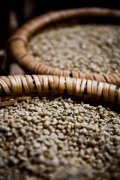
The first-class appearance and sensory characteristics project requires that the special-level sensory aroma, flavor and taste are very good. The appearance should be light blue or light green. Physical index item special level (7.1mm) test method granularity / >, 90 DB53/T 154.6 broken beans / (%), 5 DB53/T 154.8 discolored beans / (%), 1.0 DB53/T 154.8 foreign bodies / (%), 0.1 DB53/

Manual inspection of defective beans for hand selection of high-quality coffee beans
With reference to the origin and grading, grab the raw beans with your hands and check their appearance. The feeling of the hand is very important. Judging from the appearance of raw beans, their quality must have some experience, at the same time, it is difficult to set standards. The color has no difference in uniform light green, with luster. Also take into account the changes in color after harvest. The shape requires uniform and neat particles, and there should be no deformed beans.

Manual inspection of raw coffee beans how to identify defective beans from the appearance of raw beans
With reference to the origin and grading, grab the raw beans with your hands and check their appearance. The feeling of the hand is very important. Judging from the appearance of raw beans, their quality must have some experience, at the same time, it is difficult to set standards. The color has no difference in uniform light green, with luster. Also take into account the changes in color after harvest. The shape requires uniform and neat particles, and there should be no deformed beans.
What is bird-friendly coffee?
What is bird-friendly coffee? Bird Friendship is a third party established by the Smithsonian Migratory Bird Center (Sumitomo Mitsui), which is part of the Washington-based National Zoo to certify that D.C. Bird Favorable Standards are stringent environmental standards. Certified coffee is sealed. What are environmental standards? SBMC requires producers to meet requirements for organic certification first, then

A brief discussion on the perennial evergreen shrubs of the genus Coffee
1. Summary: coffee is a perennial evergreen shrub or small tree of Rubiaceae. It is native to tropical Africa and has been cultivated for more than 2000 years. The Arabs began to grow coffee in 525 BC, and it was popular for Arabs to stir-fry coffee beans. They began to grow coffee beans on a large scale after the 15th century, and were widely distributed in the tropics and subtropics of Europe, Asia, Africa and Latin America after the 18th century.
Coffee malicious rights protection leave one to ten? What are the problems with the standard quality of coffee bean production?
The Intermediate people's Court of Pingxiang City, Jiangxi Province concluded a dispute over the sale contract in the second instance, and the court finally ruled that the shopkeeper should refund the amount paid by the consumer in full and compensate the consumer for ten times the price. The court found out that Zhou, a consumer, opened an inn in Jiangxi Province because some guests needed coffee.
Fine coffee study Yunnan coffee beans special first-class standard
The first-class appearance and sensory characteristics project requires that the special-level sensory aroma, flavor and taste are very good. The appearance should be light blue or light green. Physical index item special level (7.1mm) test method granularity / >, 90 DB53/T 154.6 broken beans / (%), 5 DB53/T 154.8 discolored beans / (%), 1.0 DB53/T 154.8 foreign bodies / (%), 0.1 DB53/
Yunnan Coffee beans Special Grade II Standard
Special secondary appearance and sensory characteristics project requires special secondary sensory aroma, flavor and taste are very good. The appearance should be light blue or light green. Physical index item special second level (7.1mm) test method granularity / >, 90 DB53/T 154.6 broken beans / (%), 10 DB53/T 154.8 discolored beans / (%), 2.0 DB53/T 154.8 foreign bodies / (%), 0.1 DB53
Yunnan Coffee Bean Special Grade I Standard
The first-class appearance and sensory characteristics project requires that the special-level sensory aroma, flavor and taste are very good. The appearance should be light blue or light green. Physical index item special level (7.1mm) test method granularity / >, 90 DB53/T 154.6 broken beans / (%), 5 DB53/T 154.8 discolored beans / (%), 1.0 DB53/T 154.8 foreign bodies / (%), 0.1 DB53/